

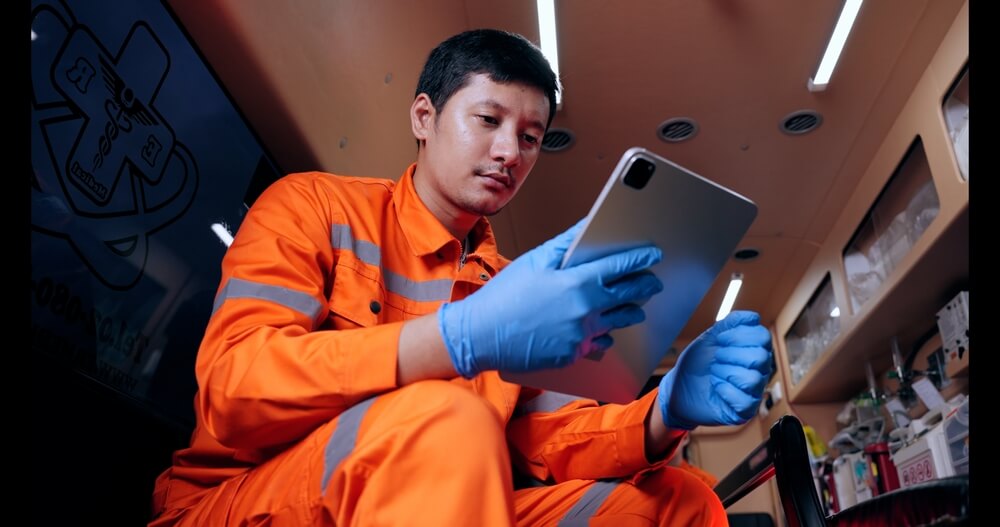
Working in healthcare is a commendable feat in itself. Yet some roles, such as patient care technicians (PCTs), are essential for the day-to-day patient care. As virtual inpatient support, remote healthcare technicians are equipped to deal with the realities of patients that a regular technician might not be aware of, thus underscoring the physical and emotional intensity of their work.
Nearly 75% of U.S. physicians now use telehealth regularly. It is driving increased demand for remote clinical support roles such as virtual PCTs. As frontline professionals, patient care technicians end up spending more time with the sick than their surgeons, physicians, and even nurses. Therefore, should you decide to hire one, you must ensure they check all the right boxes of reliable patient care.
What is a Patient Care Technician?
A Virtual Patient Care Technician (PCT) plays a vital role in supporting patient wellbeing through remote, technology-enabled care. PCTs assist with monitoring patient needs, documenting symptoms or concerns, and facilitating communication between patients and clinical teams. They help ensure comfort, safety, and continuity of care by guiding patients through routine checks, reinforcing care plans, and escalating clinical issues to nurses or providers as needed.
Patient care tech responsibilities include maintaining smooth daily operations by managing virtual patient interactions, updating electronic health records, and supporting telehealth workflows that enhance patient experience and clinical efficiency.
This role requires compassion, strong communication skills, attention to detail, and a commitment to delivering high-quality care within a modern, patient-centered virtual environment.
Types of Patient Care Technician (PCT)
A patient care technician job falls under the umbrella category of a medical/healthcare technician. Their types depend on what a patient care tech actually does.
Moreover, virtual PCT job duties extend to being hired for remote patient care.
The common areas where patient care tech duties and responsibilities are valued are:
→ Remote Hospital Technician: Provides virtual assistance to hospital care teams. By documenting patient data, monitoring vitals remotely, and communicating updates through EHR systems.
→ Remote ICU Support PCT: Supports critical care units. By tracking patient vitals through remote monitoring systems. Promptly alerting clinical teams to abnormal trends.
→ Remote Emergency Department PCT: Assists emergency departments remotely by managing patient intake documentation, tracking labs and EKGs, and supporting rapid care coordination.
→ Remote Long-Term Care PCT: Monitors residents’ health data, documents daily care activities, and coordinates communication between caregivers and clinical staff.
→ Remote Behavioral Health PCT: Supports mental health teams by documenting patient behavior, assisting with telehealth sessions, and reporting safety or clinical concerns.
→ Virtual Pediatric Patient Care Tech: Provides virtual support for pediatric patients by assisting with symptom tracking, parent communication, and telehealth follow-ups.
→ Remote Radiology Patient Care Tech: Coordinates imaging appointments, manages patient instructions, and ensures accurate documentation before and after diagnostic procedures.
→ Remote In-Home Care Support PCT: Assists home-based patients through virtual check-ins, health monitoring, and ongoing communication with healthcare providers.
What Does a Patient Care Technician Do? Roles and Responsibilities Explained!
A patient care technician encompasses a plethora of responsibilities in a healthcare setting. As the name suggests, they primarily deal with patient care; however, their skills extend from basic daily care to technical care.
Daily Virtual Patient Support
Provides remote assistance to patients through telehealth platforms. Includes guiding daily care routines, mobility instructions, and basic self-care education.
Remote Monitoring of Vital Signs
Monitors blood pressure, temperature, heart rate, and oxygen levels using remote patient monitoring systems. They also document changes for clinical review.
Digital Sample & Lab Coordination
Coordinates laboratory testing by scheduling sample collections, tracking results, and ensuring accurate documentation rather than performing physical collection.
Clinical Team Support (Remote)
Perhaps the most important responsibility of a patient care tech entails remotely assisting nurses and doctors during procedures and routine tasks.
Where do Virtual Patient Care Technicians Work?
A patient care technician may work for a hospital, nursing home, assisted living facility, or provide virtual in-home services, depending on their specialty.
Nevertheless, a patient care technician role is a crucial entity in medicine, without which the healthcare system could not function effectively…
Essential Skills of a Patient Care Technician
Should a person decide to become a virtual patient care technician, there is a set of technical skills they can acquire via proper training and practice. These include monitoring and recording vitals remotely, guiding and preparing patients for procedures, etc.
However, there is a completely separate set of skills a PCT must have to actually qualify as one. These are strong communication skills to connect with patients, attention to detail to accurately monitor patients under their care, teamwork as they must work closely with nurses, doctors, and other healthcare staff, and physical stamina to handle long shifts and hands-on patient tasks.
Essential PCT skills are:
- Compassionate and attentive in providing remote care.
- Skilled in digital health tools and patient monitoring.
- Works effectively with nurses and healthcare professionals online.
- Clear, respectful, and empathetic interaction across virtual channels.
Qualification requirements usually mention inthe patient care tech job description are:
- Bachelor’s degree required.
- Prior healthcare or hospital experience preferred.
- Excellent communication, attention to detail, and ability to multitask in a fast-paced remote environment.
- Reliable internet connection, basic computer proficiency, and familiarity with telehealth platforms and electronic health records (EHR) systems.
Patient Care Technician vs CNA vs MA: What’s the Difference?
A patient care technician is often mistaken for a nurse or a medical assistant due to the apparent overlap of responsibilities among the three. However, PCTs have a broader scope of skills than the other two and require specialized training.
While a certified nursing assistant (CNA) is usually trained to perform basic patient care, assisting with Activities of Daily Living (ADLs), a patient care technician deals with advanced clinical tasks along with the CNA duties. A medical assistant takes on more of an administrative role in healthcare.
While Patient Care Technicians (PCTs), Certified Nursing Assistants (CNAs), and Medical Assistants (MAs) all support healthcare teams, their training, responsibilities, and work settings differ significantly
→ Patient Care Technician (Virtual PCT)
- Combines hands-on clinical knowledge with remote patient monitoring and telehealth support.
- Tracks vitals, symptoms, and alerts using RPM tools, EHRs, and clinical dashboards.
- Supports nurses and physicians across multiple departments simultaneously.
- Plays a critical role in early intervention, care coordination, and continuity of care.
- Requires stronger clinical judgment, documentation accuracy, and tech proficiency.
- More scalable, higher-impact role in modern and future-focused healthcare systems.
→ Certified Nursing Assistant (CNA)
- Focuses primarily on basic, in-person patient care and daily living assistance.
- Limited clinical scope; does not independently perform technical or monitoring tasks.
- Works under direct supervision with minimal documentation responsibilities.
- Primarily facility-based with little involvement in telehealth workflows.
- The role is essential but restricted to bedside support.
→ Medical Assistant (MA)
- Balances administrative and basic clinical duties in outpatient settings.
- Focuses on patient intake, scheduling, billing, and room preparation.
- Limited involvement in acute care or continuous patient monitoring.
- Typically supports physicians rather than nursing teams.
- Less exposure to inpatient or high-acuity clinical environments.
Why the Virtual PCT Role Stands Out!
→ Extends clinical care beyond physical walls. Through technology.
→ Enhances patient safety through real-time monitoring and rapid escalation.
→ Supports multiple care teams, improving efficiency and workload balance.
→ Represents the most adaptable and future-ready role among the three.
Benefits of Hiring a Healthcare Patient Technician for your Practice!
Patient Care Technicians (PCTs) play a critical role in keeping healthcare facilities efficient, compliant, and patient-focused. They handle essential frontline tasks and offer crucial support to clinical teams, allowing licensed professionals to focus on higher-level medical responsibilities.
Hence, patient care technician staffing has become a necessity in healthcare settings rather than merely a convenience.
Most prominent benefits your practice enjoys when you hire a virtual patient care technician are:
- Improves clinical workflow by handling patient monitoring, documentation, and routine care tasks.
- Enhances patient safety through consistent vital sign tracking and timely reporting.
- Increases provider efficiency by allowing doctors and nurses to focus on critical care.
- Improves patient experience with continuous support, education, and reassurance.
- Offers a cost-effective staffing solution without compromising quality of care.
- Strengthens care coordination between patients and clinical teams.
- Supports growing practices with scalable staffing solutions.
- Adapts seamlessly to telehealth and remote patient monitoring models.
It is also paramount that such an important role is filled through a reliable patient care technician staffing agency to help healthcare facilities stay agile and ensure patient satisfaction.
Hire the Right Patient Care Technicians for Your Facility with Health & Jobs!
Whether you need short-term hospital staffing support, long-term placements, or outsourcing, Health & Jobs offers patient care technician shortage solutions in the midst of nationwide workforce challenges.
It’s more than just filling vacancies… the right patient care technician must adapt to a fast-paced clinical environment in order to strengthen workflow.
As a program dedicated to delivering tailored clinical staffing services, we are designed to meet the evolving requirements of healthcare settings.
Patient care technicians at our disposal are screened for both technical competency and workplace readiness. Health & Jobs acutely understands industry demands, helping organizations hire patient care technicians who integrate seamlessly into existing teams. Ready to work from day one.
Why Hire with Health & Jobs?
At Health & Jobs, we offer a healthcare workforce solution. With us, you will get:
→ Access to pre-vetted, highly qualified healthcare professionals.
→ Specialized recruitment for virtual Patient Care Technicians.
→ HIPAA-compliant candidates. Trained in EHR systems and clinical workflows.
→ Faster hiring process. Offering reduced administrative burden.
→ Trained on healthcare skills, communication ability, and cultural fit for United States healthcare.
→ Cost-effective staffing solutions without compromising care quality.
→ Flexible hiring models. We support short-term, long-term, and remote needs.
→ Ongoing support. It is to ensure a smooth onboarding and workforce retention.
Schedule your consultation. Partner with Health & Jobs to hire a dependable patient care technician and build a stronger, more resilient healthcare team today!
FAQs
What is a patient care tech?
A patient care technician (PCT) is part of the medical team, trained to provide hands-on patient support and assist clinical staff in healthcare settings.
What does a patient care tech do?
A patient care tech helps with basic patient care, performs vital signs, collects samples, and supports nurses.
What is the difference between a patient care tech and cna?
While both provide direct patient care, PCTs receive specialized training to perform technical tasks such as EKGs and phlebotomy.
Can a Patient Care Technician (PCT) become a nurse later?
Yes. PCTs may utilize their hands-on clinical experience as a stepping stone to pursue nursing programs, after gaining valuable skills and exposure that make the transition smoother.